The Little Preacher from Troy: Chapter 3
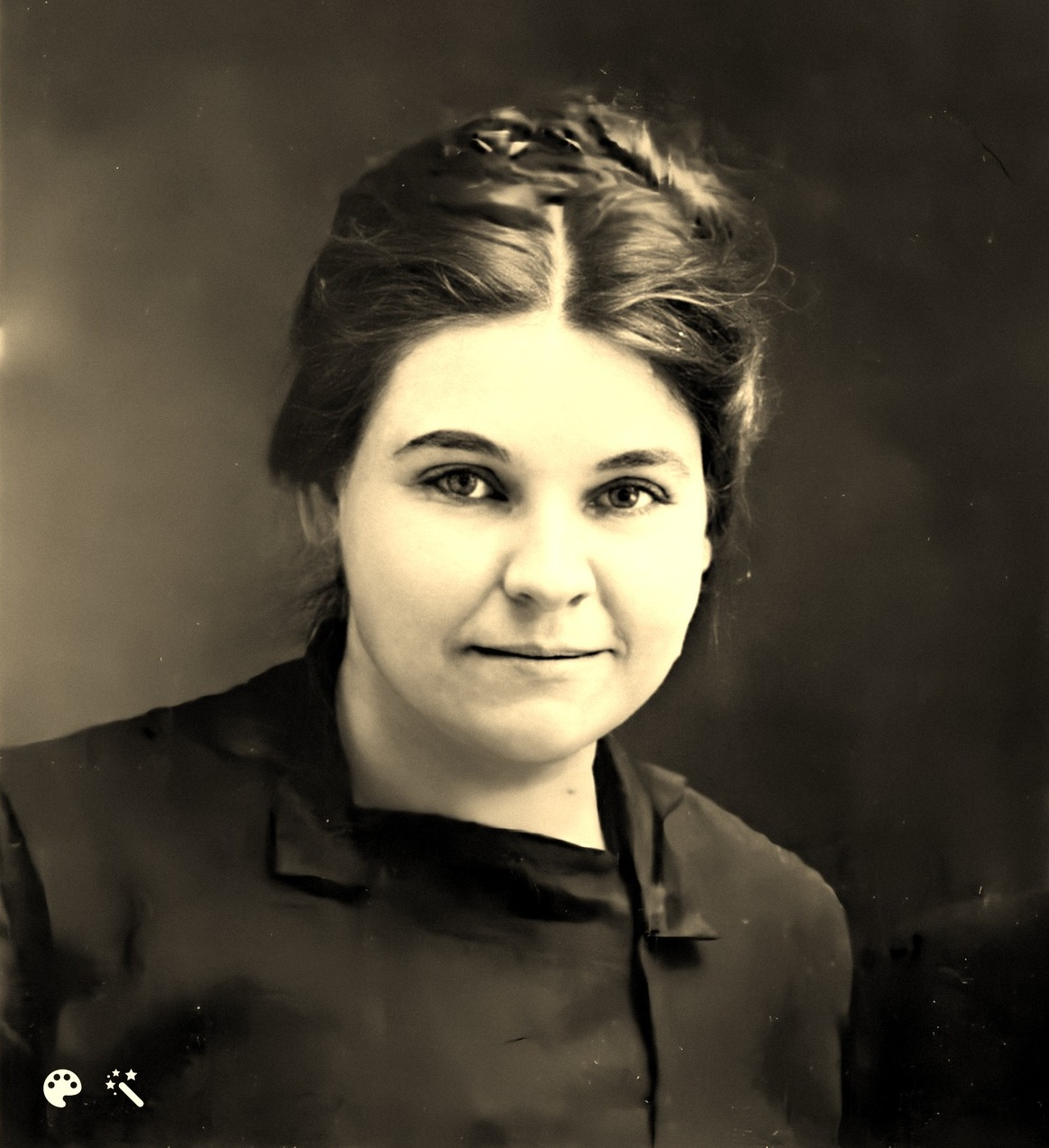
It was at that same Conference I received an annual Conference Evangelist’s License. At this same Conference, I met the delegate from Clarenceville, Quebec, a young man named Clarence Hawley. I asked if he knew who would be their next preacher. He said a young man from Buffalo, New York was expected to come. He said he had graduated from Buffalo State Teacher’s College and had been teaching in Buffalo but now felt he should enter the ministry.
Later on in the next year, 1916, we held meetings in Burlington, Vermont. We heard more there about the young man from Buffalo. The preacher, Rev. W.E. Sitzer, kept trying to work on our sympathies by picturing him as “the lonely young man,” so far from his home and trying to keep house in the parsonage at Clarenceville. He thought he needed a companion and housekeeper, and we ought to have compassion for him and one of us help him out. We went about our work and forgot about him. The next Conference, in September, 1917, was at Watertown, New York. Here we saw this young man for the first time. His delegate was a young man, Clarence Hawley, from that circuit whom I had known at Clarenceville a few years before, mentioned earlier. He seemed to take a liking to Anna Belle and the first night asked to “see her home.” I had to tag along, because of course Anna Belle and I stayed together at the same place. When we were alone in our room, she asked if I had met Professor Blowers. I said, “No.” She said, “Oh, I did.” The next day, I was introduced to him. Between the services on Saturday night everyone was going to a restaurant to eat. Anna Belle’s admirer asked her to go; the young man from Buffalo, Rev. Milton Clarence Blowers, asked me to go. Because she hesitated so long between two opinions, and I had never gone anywhere or done anything without her, I thought I had to wait to give my consent until she gave hers. But the “young man from Buffalo” left. Then she consented to go. That left me to tag along alone with Clarence and Anna Belle. At the restaurant, when we were seated, I looked around and way across the room the man from Buffalo sat at a table facing me, with his cousin, Charles Blowers, a young man from North Chili.
When we reached our room that night, Anna Belle said, “You don’t need to try to get him. He has another girl.”
After Conference, I went home to visit my folks in September, 1917. I kept feeling ashamed for the way I had treated Milton Blowers. Finally, I felt I should apologize for what had happened and wrote a short note of explanation and apology.
In a few days, I had a letter from him. He was going through Troy, my home town, when he went home for Christmas and asked if he could stop over at Troy so he could get better acquainted and he could meet my family. As it happened, the next place I was going to hold meetings was Gowanda, near Buffalo. He was going to Franklinville to be with his folks for Christmas of 1917.
He did stop over at Troy for a couple of days, then went on. But I was supposed to go by train, after Christmas, to Buffalo, where he would meet me and go to meet his family at Franklinville, and go from there to Gowanda.
He had relatives near Gowanda, so decided to go there with me and stay at his relatives’ and attend the meetings over Sunday, on January 2, 1918, because Monday he had to leave for Canada and we might not see each other till the next August. During this time, while I was staying at his house in Franklinville, he asked me to marry him. I consented but we set no date. When we reached Gowanda late in the day, he found his relatives, where he had intended to stay, had left town for the weekend. So he had no place to stay and no way to get back to Franklinville.
There was a lady pastor at Gowanda. He asked her if he could stay there overnight. When I went to our room, Anna Belle said, “You must give him up. He has another girl and the pastor is very displeased at his coming to town with you. He has fooled other girls and he’ll fool you too.”
I was so used to coming under to others, I thought, “I must call this off and write to him that it can go no further.” So he had hardly reached Clarenceville, Quebec when he received my letter.
Things went on as usual in our work until I thought things through for myself. Then I felt I had wronged him, so I wrote and we renewed our engagement secretly. I picked up my mail at the post office after that and no one knew I was writing to him, till after the next Conference which was the next August. We didn’t see each other from January till August of 1918.
After the 1918 Conference we planned our wedding for Thanksgiving Day of that year, November 26, 1918 and Rev. William H. Clark, afterward Bishop in the Free Methodist Church, was to perform the ceremony at my mother’s home in Troy.
After Conference I remained at home at my mother’s and went to work as a forelady in a collar factory to get money to finance my wedding. My father had died on July 27, 1915 at age sixty-five while I was at Chittenango; all the family were married and in their own homes except my younger sister, Eva, who lived with my mother.
Bishop Clark was a very close friend of my parents. They had been taken into the Free Methodist Church by B.T. Roberts. He had visited in our home many times while I was growing up. He was, at the time, Milton’s District Elder, so we asked him to perform the ceremony. He had also been the pastor of the Oswego, New York Free Methodist Church where my parents were members before they moved to Cohoes.
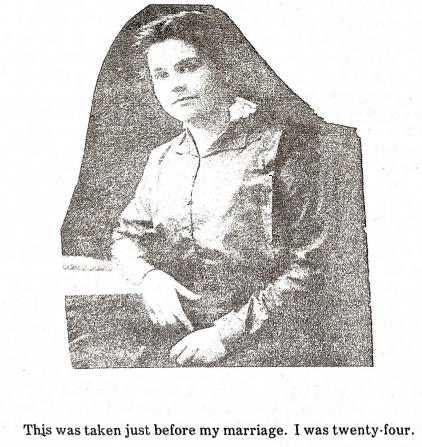 The wedding was held at my mother’s home. The folks upstairs were away and allowed us to use their apartment before the wedding, so the bridal party could come down the front stairs into the parlor. I made a pretty white dress for my wedding dress and a pretty blue dress for traveling. In the front hall was a large table with gifts on it. My brother Roy was the best man and my sister Eva was maid of honor. It was a pretty wedding, though simple. I wanted it that way. There was a wedding cake and other cakes, ice cream, tea and coffee. All my family were there. Of course, my father had passed away. Only one of Milton’s family was there, his sister Myrtle Hamilton who now lives in Rushford, New York. She had been helping Milton at Clarenceville, but she was on her way home to Franklinville, now that I would be the “Lady of the Manse.”
When Rev. Clark was about to leave to return to his home in Rome, New York, suddenly there was a burst of laughter all over the house. Everyone seemed to be in on the joke but the bride and groom. We finally learned that Rev. Clark had brought us a beautiful blanket as a gift. It was taken from the suitcase in which he had brought it and placed with the other gifts. Someone had taken the suitcase upstairs and it was placed near the luggage of the bridal pair. When Rev. Clark found it, it was filled with bricks. Someone thought they were playing a joke on us.
We were scheduled to leave Troy at 6:00 P.M. on a train going to Burlington, Vermont, where we were to stay overnight and go on to Clarenceville, Quebec the next day. We bid the folks good-bye at the house and my brother-in-law, Lew Grandjean, was to get us to the station in Troy in his car. As we left the house, he headed north instead of south. He tried to convince us we couldn’t get the train downtown in Troy because it was too late, but must take the train at another station. I argued with him that the train didn’t ever stop at that station. Finally I persuaded him to head for Troy. When we got further downtown he left the paved street and took us several blocks out of our way over cobblestone pavements. Finally we pulled up at the train station and as I got out of the car, I was pelted with rice. It was in the rim of my hat and someone pulled back the collar of my coat and put some down my neck, which I had to endure for the next several hours. Lew had sidetracked us to allow the wedding guests to congregate at the station before our arrival there. They followed us out to the train. There was rice all around our seat on the train. When they had to get off the train, they got on the baggage cart and some pushed it way to the end of the station platform.
Rev. and Mrs. Sitzer, close friends of mine, gave us a royal welcome at the Free Methodist parsonage at Burlington, Vermont that night. It was nearly midnight when we got there. The next morning we left there and finally arrived at the Clarenceville parsonage, after quite a long train ride, and about nine miles with horse and buggy.
We had two preaching appointments and the first Sunday, November 29, 1918, we had to be at the one which was a great distance away. We had to go before Sunday and stay at the Holden home. On Sunday, we had a service there in the morning and quite a distance to the Tittemore home for the evening service.
This was the home of missionary Lucy Tittemore. It was now December 1st of 1918 and the long road leading up to the house was frozen in the snowy and muddy ruts. Just ahead of us one of our members, Mr. Whitney, was driving a frisky horse and he was riding in an open “cutter.” Suddenly the horse started to run out of control. Mr. Whitney was thrown out and injured. A doctor was called and a sleigh with a cot and blankets was prepared. After the doctor had done what he could, they placed him in the sleigh and my husband, being an excellent horseman, took off, driving the horse on a five or six mile trip.
This happening put me in a very awkward position. I had never met these people at this end of the circuit, I was the preacher’s new wife and had to preach, pray, sing — I won’t say die, but I sure felt stranded. Milton didn’t get back till evening service was over. We stayed there overnight and next day went to the injured man’s home and helped take care of him. Milton made some kind of contraption fastened to the top of the room, so he could raise himself in bed. He had some broken bones, which the doctor had set. So that was my first Sunday as a preacher’s wife.
Milton had some furniture, such as a parlor suite and a bedroom suite; there was dining furniture that belonged to the parsonage, stoves, etc., so when my mother shipped our beautiful wedding gifts, we had a lovely home, when we could be there to enjoy it.
As it was, we spent a week at our own home and drove with horse and buggy or cutter, according to the weather, twenty-five miles to the other end of the circuit, where we also spent a week before we returned home. While there we stayed at the Holden home, which was a very large house and farm, where several people were employed and lived. We had many and varied experiences driving either through snow or mud, for there were few paved roads then.
During that year of 1919, my husband decided to go to the Genesee Conference, which was held at Potomac Avenue Free Methodist Church in Buffalo, New York. When the appointments were read, we were sent to the Olean church. This was a new church. They had bought it from another denomination. There was no parsonage. The former pastor owned his own home where he lived in Olean. Arrangements were made for us to live in a part of the former preacher’s home. It was not an ideal arrangement. They had the front parlor, we had the back parlor, we had the dining room and we both used the same kitchen and the same sink. They had the cupboards in the kitchen; we had a small pantry. Upstairs, we had one bedroom and a very small room which was used as a study. Both families used the same bathroom.
This arrangement held till about March; we had moved there in September. Then the landlord decided that they would have all the downstairs and we would have the front bedroom upstairs for our parlor, which was a small room. We would still have the next bedroom down the hall for our bedroom, and the back bedroom which was also small, for a kitchen. We would still have the little den.
There was neither stove, sink or cupboard in the back bedroom. Daddy bought a little gas plate to cook on and made a cupboard out of wooden boxes. I had to carry all water from and to the bathroom for kitchen use.
We had just nicely gotten placed there when the church bought a parsonage near the church. It was quite a long walk from where we lived to the church; of course we had no car. There would be quite a long wait until we could move. The new parsonage was only a block from the church.
One day in late March or early April, we stopped in the new parsonage and asked the occupants how soon they would be moving. They mentioned that the Superintendent and one of the officials from the church had been there and that they were planning to rent out the upstairs rooms, two of them, to some of the railroad men who had to stay overnight in Olean, as that was the end of the line for some of them. That would have left us with one small room downstairs, not large enough for bed and dresser. We had been married nearly two years and were expecting a new baby. My mother, who was a practical nurse, was planning to come from Troy to take care of me. We did not go to the hospitals then as they do now. The arrangement, as had been planned, would leave us without one real bedroom and no place for my mother to stay, or the baby. It also left no place for any parsonage guests who might be there for a continued time. This was something we just could not agree to.
After several meetings, they finally consented to let us use the smaller bedroom upstairs. This did not help much. Secondhand furniture, such as beds, mattresses and dressers were bought for that front room. The beds and dressers needed refinishing, walls needed papering, floors needed refinishing, and who did it? my beloved husband. After this was all done and the room was bright and shining, it was closed. We had no trouble about the room because no one ever tried to rent it. It looked so nice after the refurbishing. When my mother, who had quite a sense of humor, came, she would sometimes open the door carefully and look in and say, “I was just viewing the corpse”.
For the first part of the Conference year 1919-1920, my husband and I alternated with the preaching as we had done since we were married.
In the spring of 1920, a member of our church, Mr. La Quay, who was teaching industrial arts in the Olean High School, told my husband he was going elsewhere and the job would be available to him if he would apply. Milton, as has been mentioned before, had graduated from Buffalo State Teacher’s College and had taught in Buffalo before entering the ministry. He applied and got the job. We were in a bind and had to make a change because of the new baby that was coming.
We bought a new house in a new part of the town; in fact, the workmen were just leaving that night as we moved in. My mother had been with us for a time and so helped us to get moved and settled. On November 2, 1920, Election Day, our first child was born. We named him Vernon Alvin. He weighed 11-½ pounds and was a beautiful child. Of course we were very proud of him. He was healthy and developed into a very lively boy. While at Olean we often went to Grandma Blowers’ on weekends. It was about twenty miles north of Olean.
The wedding was held at my mother’s home. The folks upstairs were away and allowed us to use their apartment before the wedding, so the bridal party could come down the front stairs into the parlor. I made a pretty white dress for my wedding dress and a pretty blue dress for traveling. In the front hall was a large table with gifts on it. My brother Roy was the best man and my sister Eva was maid of honor. It was a pretty wedding, though simple. I wanted it that way. There was a wedding cake and other cakes, ice cream, tea and coffee. All my family were there. Of course, my father had passed away. Only one of Milton’s family was there, his sister Myrtle Hamilton who now lives in Rushford, New York. She had been helping Milton at Clarenceville, but she was on her way home to Franklinville, now that I would be the “Lady of the Manse.”
When Rev. Clark was about to leave to return to his home in Rome, New York, suddenly there was a burst of laughter all over the house. Everyone seemed to be in on the joke but the bride and groom. We finally learned that Rev. Clark had brought us a beautiful blanket as a gift. It was taken from the suitcase in which he had brought it and placed with the other gifts. Someone had taken the suitcase upstairs and it was placed near the luggage of the bridal pair. When Rev. Clark found it, it was filled with bricks. Someone thought they were playing a joke on us.
We were scheduled to leave Troy at 6:00 P.M. on a train going to Burlington, Vermont, where we were to stay overnight and go on to Clarenceville, Quebec the next day. We bid the folks good-bye at the house and my brother-in-law, Lew Grandjean, was to get us to the station in Troy in his car. As we left the house, he headed north instead of south. He tried to convince us we couldn’t get the train downtown in Troy because it was too late, but must take the train at another station. I argued with him that the train didn’t ever stop at that station. Finally I persuaded him to head for Troy. When we got further downtown he left the paved street and took us several blocks out of our way over cobblestone pavements. Finally we pulled up at the train station and as I got out of the car, I was pelted with rice. It was in the rim of my hat and someone pulled back the collar of my coat and put some down my neck, which I had to endure for the next several hours. Lew had sidetracked us to allow the wedding guests to congregate at the station before our arrival there. They followed us out to the train. There was rice all around our seat on the train. When they had to get off the train, they got on the baggage cart and some pushed it way to the end of the station platform.
Rev. and Mrs. Sitzer, close friends of mine, gave us a royal welcome at the Free Methodist parsonage at Burlington, Vermont that night. It was nearly midnight when we got there. The next morning we left there and finally arrived at the Clarenceville parsonage, after quite a long train ride, and about nine miles with horse and buggy.
We had two preaching appointments and the first Sunday, November 29, 1918, we had to be at the one which was a great distance away. We had to go before Sunday and stay at the Holden home. On Sunday, we had a service there in the morning and quite a distance to the Tittemore home for the evening service.
This was the home of missionary Lucy Tittemore. It was now December 1st of 1918 and the long road leading up to the house was frozen in the snowy and muddy ruts. Just ahead of us one of our members, Mr. Whitney, was driving a frisky horse and he was riding in an open “cutter.” Suddenly the horse started to run out of control. Mr. Whitney was thrown out and injured. A doctor was called and a sleigh with a cot and blankets was prepared. After the doctor had done what he could, they placed him in the sleigh and my husband, being an excellent horseman, took off, driving the horse on a five or six mile trip.
This happening put me in a very awkward position. I had never met these people at this end of the circuit, I was the preacher’s new wife and had to preach, pray, sing — I won’t say die, but I sure felt stranded. Milton didn’t get back till evening service was over. We stayed there overnight and next day went to the injured man’s home and helped take care of him. Milton made some kind of contraption fastened to the top of the room, so he could raise himself in bed. He had some broken bones, which the doctor had set. So that was my first Sunday as a preacher’s wife.
Milton had some furniture, such as a parlor suite and a bedroom suite; there was dining furniture that belonged to the parsonage, stoves, etc., so when my mother shipped our beautiful wedding gifts, we had a lovely home, when we could be there to enjoy it.
As it was, we spent a week at our own home and drove with horse and buggy or cutter, according to the weather, twenty-five miles to the other end of the circuit, where we also spent a week before we returned home. While there we stayed at the Holden home, which was a very large house and farm, where several people were employed and lived. We had many and varied experiences driving either through snow or mud, for there were few paved roads then.
During that year of 1919, my husband decided to go to the Genesee Conference, which was held at Potomac Avenue Free Methodist Church in Buffalo, New York. When the appointments were read, we were sent to the Olean church. This was a new church. They had bought it from another denomination. There was no parsonage. The former pastor owned his own home where he lived in Olean. Arrangements were made for us to live in a part of the former preacher’s home. It was not an ideal arrangement. They had the front parlor, we had the back parlor, we had the dining room and we both used the same kitchen and the same sink. They had the cupboards in the kitchen; we had a small pantry. Upstairs, we had one bedroom and a very small room which was used as a study. Both families used the same bathroom.
This arrangement held till about March; we had moved there in September. Then the landlord decided that they would have all the downstairs and we would have the front bedroom upstairs for our parlor, which was a small room. We would still have the next bedroom down the hall for our bedroom, and the back bedroom which was also small, for a kitchen. We would still have the little den.
There was neither stove, sink or cupboard in the back bedroom. Daddy bought a little gas plate to cook on and made a cupboard out of wooden boxes. I had to carry all water from and to the bathroom for kitchen use.
We had just nicely gotten placed there when the church bought a parsonage near the church. It was quite a long walk from where we lived to the church; of course we had no car. There would be quite a long wait until we could move. The new parsonage was only a block from the church.
One day in late March or early April, we stopped in the new parsonage and asked the occupants how soon they would be moving. They mentioned that the Superintendent and one of the officials from the church had been there and that they were planning to rent out the upstairs rooms, two of them, to some of the railroad men who had to stay overnight in Olean, as that was the end of the line for some of them. That would have left us with one small room downstairs, not large enough for bed and dresser. We had been married nearly two years and were expecting a new baby. My mother, who was a practical nurse, was planning to come from Troy to take care of me. We did not go to the hospitals then as they do now. The arrangement, as had been planned, would leave us without one real bedroom and no place for my mother to stay, or the baby. It also left no place for any parsonage guests who might be there for a continued time. This was something we just could not agree to.
After several meetings, they finally consented to let us use the smaller bedroom upstairs. This did not help much. Secondhand furniture, such as beds, mattresses and dressers were bought for that front room. The beds and dressers needed refinishing, walls needed papering, floors needed refinishing, and who did it? my beloved husband. After this was all done and the room was bright and shining, it was closed. We had no trouble about the room because no one ever tried to rent it. It looked so nice after the refurbishing. When my mother, who had quite a sense of humor, came, she would sometimes open the door carefully and look in and say, “I was just viewing the corpse”.
For the first part of the Conference year 1919-1920, my husband and I alternated with the preaching as we had done since we were married.
In the spring of 1920, a member of our church, Mr. La Quay, who was teaching industrial arts in the Olean High School, told my husband he was going elsewhere and the job would be available to him if he would apply. Milton, as has been mentioned before, had graduated from Buffalo State Teacher’s College and had taught in Buffalo before entering the ministry. He applied and got the job. We were in a bind and had to make a change because of the new baby that was coming.
We bought a new house in a new part of the town; in fact, the workmen were just leaving that night as we moved in. My mother had been with us for a time and so helped us to get moved and settled. On November 2, 1920, Election Day, our first child was born. We named him Vernon Alvin. He weighed 11-½ pounds and was a beautiful child. Of course we were very proud of him. He was healthy and developed into a very lively boy. While at Olean we often went to Grandma Blowers’ on weekends. It was about twenty miles north of Olean.
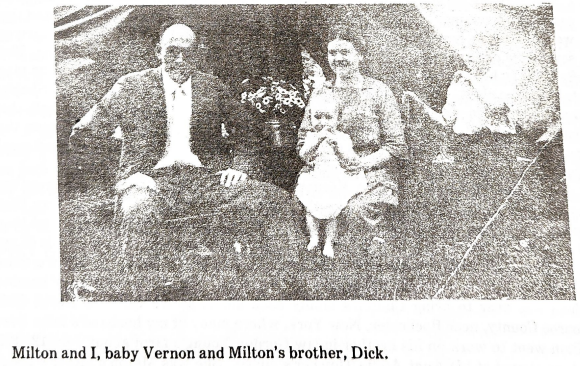 When Vernon was about a year old, I received the shocking news that my mother had died very suddenly with a heart attack. Of course that meant a long trip to Troy to attend the funeral. She had been to three church services that day, had come home Sunday night and was gone soon after reaching home. My youngest sister, Eva Sandall, had recently married and my mother was living with her and her husband. The funeral was held at their home and the burial was in a new cemetery on the hill in Troy. Soon after, my father’s casket was moved from Oakwood Cemetery to the same one where my mother was buried. More of my family, Clara, Rob, Hattie and others, have been buried there since.
A few months later, on March 14, 1922, my second child was born; a girl this time. She weighed 10-¼ pounds. She had long dark hair which reached the neck of her gown. Vernon was brought in to see her and he buried his head in her hair and kept saying, “Little Dee, little Dee”. Although she was named Ethelyn Marjorie, at this present time everyone calls her “Dee”.
With two small babies, sixteen months apart, my life was centered mostly at home. It was quite a change from my former life but we had a car and often went to Franklinville, district meetings and camp meetings. Milton planned to go to Oswego State Teacher’s College for a summer course. His brother Clinton and wife Minnie and children June, Marion and Eunice decided to go too. Clinton didn’t have a car then. Dee was then about three months old and Clinton’s baby girl, Eunice (now Eunice Warwick) was the same age.
On the day before we left, I put Vernon on the side porch to play. We were all at Grandma Blowers’. I had much to do to get ready to go. I heard him crying and opened the door and there he stood with his tongue out of his mouth, trying to cry. He held a small pitcher in his hand. I saw right away what had happened. At Grandma’s they had a gasoline lamp which they filled out on that porch, using a pitcher. Some gasoline had been left in the pitcher and Vernon had drunk some of it. Believe me, I was scared! I ran to two neighbors’ to see if they had any ipecac. I gave him some, then ran down the street to the doctor’s office. I rushed in out of breath and told him what had happened. He asked what I had done. I told him. He said, “I couldn’t do any more if I came down. Go home, run your finger down his throat till he brings it up.” I rushed back home and as I opened the door I knew he had found relief, for the whole house smelled of gasoline.
The next day we started for Oswego, on the Fourth of July, 1922. We had ordered tents, as the summer students tented in the grove near the college. We expected they would be ready for occupancy when we arrived but no tent! Some had arrived, some were on the road somewhere. They were using the policy “First Come, First Served,” so here we were, ten of us with the children, and night coming on no place to go for the night. Finally they told us to go into the empty rooms in the old Sheldon home. They loaned us some cots and so we had to get along. Out in the long hall, they found some wooden doors, put them up on “horses” which we covered and made that our dining area. We had a small oil stove with one wick in it on which we cooked meals for all of us. Both Milton and Clinton had to start classes the next day.
Because of the dose of gasoline, Vernon kept having vomiting spells and there was no way to wash clothes, only to take them down a long flight of stairs, carry them around to the back of the house to the well where we had to rub them hard to get them clean with soap and hard well water and that was cold. After a week of this it was more than we could take, with two small babies, so we decided to leave. We didn’t want to go way home to Olean because we would have to drive so far after summer school was over to bring Clinton’s family back home, so we came to North Chili, Monroe County, near Rochester, New York, where many of my husband’s folks lived. Milton went to work on his brother-in-law Gordon Young’s farm about July 12, 1922 and we stayed at his Aunt Addie Thurber’s house. She was Milton’s father’s sister. She and her husband, Uncle Charles Thurber, had retired from the ministry in Genesee Conference. They and their teen-age daughter, Miriam, now Miriam Rose, were living at North Chili. She used to help me when we would take the babies out in a borrowed carriage. We spent a pleasant summer. Milton stayed nights at Aunt Addie’s. We finally got Clinton’s family and took them with us to our home in Olean. From there they moved to Michigan in August, 1922, where Minnie, Clinton’s wife, afterwards taught music at Spring Arbor College.
As for us, my husband taught again there in Olean in 1922, 1923, and 1924. With the two babies, my housework and other duties, I kept very busy. Milton always liked to go home to Franklinville and I went until I thought I was taking chances, for at the close of the next school year, I was expecting my third child. School had just closed for summer and it being a warm day, Milton wanted me to go again to Franklinville for the weekend. I was afraid I might take sick up there and we already had our doctor and nurse in Olean on whom we were depending. He said, “Let’s go; if anything happens up there, Mother can take care of you.” I said, “That’s just what I don’t want to happen.” But he won and we went. Sunday night I had to ask him to call a local doctor. He came and stayed all night. I wasn’t going anywhere about that time. The next morning about 7:00 o’clock, at just about the time several of Milton’s sisters, who were teachers, were hurrying around, getting ready to leave for the summer at Chautauqua, my third baby was born on July 2, 1923, a boy we named Eldon Pearce. My husband had a lady come in and help as there was too much for Grandma Blowers to do.
As soon as I was able to be around, Grandma and the boys, Dick and Stan, went to camp meeting at Salamanca. It was decided that the next Sunday we would go to the camp. It was very early when we got up and got there to have breakfast with Grandma as she had requested. Vernon left the table before we had finished and I thought he was playing in front of the tent. When I looked for him, he couldn’t be found anywhere on the campground. I couldn’t help but think of the river and the railroad which were not far away. We searched everywhere but he seemed to be nowhere. Finally we went off the grounds and away up the road we saw Dick and Stan, Milton’s two younger brothers, coming with Vernon between them. It was a hot July morning and Vernon’s face looked so red and he was very hot and tired and exhausted. The boys had taken him way up the road to a farm to see the cows.
That was a hard day for me. I wasn’t very strong and with the work of getting up so early and feeding all the youngsters, bathing and dressing them, the long trip to the camp, carrying babies around all day, when it came time to go home I felt as if I had “had it.” But it wasn’t all over yet. Going home over a country road, cars were coming toward us with bright lights that blinded Milton, so for a second, he didn’t see the road. I felt the car go down on my side and heard stones tumble down the bank and splash in the water. I was terribly frightened. We were hung on a bank just above a creek. Other cars pulled alongside and when the people in them saw me with the three little ones, they got me out of the car and into theirs. The men helped to get the car up on the road again. It wasn’t damaged and no one was hurt, for which we thanked God, but I felt by the time we reached home that that had been quite a day! I was so thankful when I had the children all bedded down for the night.
When Vernon was about a year old, I received the shocking news that my mother had died very suddenly with a heart attack. Of course that meant a long trip to Troy to attend the funeral. She had been to three church services that day, had come home Sunday night and was gone soon after reaching home. My youngest sister, Eva Sandall, had recently married and my mother was living with her and her husband. The funeral was held at their home and the burial was in a new cemetery on the hill in Troy. Soon after, my father’s casket was moved from Oakwood Cemetery to the same one where my mother was buried. More of my family, Clara, Rob, Hattie and others, have been buried there since.
A few months later, on March 14, 1922, my second child was born; a girl this time. She weighed 10-¼ pounds. She had long dark hair which reached the neck of her gown. Vernon was brought in to see her and he buried his head in her hair and kept saying, “Little Dee, little Dee”. Although she was named Ethelyn Marjorie, at this present time everyone calls her “Dee”.
With two small babies, sixteen months apart, my life was centered mostly at home. It was quite a change from my former life but we had a car and often went to Franklinville, district meetings and camp meetings. Milton planned to go to Oswego State Teacher’s College for a summer course. His brother Clinton and wife Minnie and children June, Marion and Eunice decided to go too. Clinton didn’t have a car then. Dee was then about three months old and Clinton’s baby girl, Eunice (now Eunice Warwick) was the same age.
On the day before we left, I put Vernon on the side porch to play. We were all at Grandma Blowers’. I had much to do to get ready to go. I heard him crying and opened the door and there he stood with his tongue out of his mouth, trying to cry. He held a small pitcher in his hand. I saw right away what had happened. At Grandma’s they had a gasoline lamp which they filled out on that porch, using a pitcher. Some gasoline had been left in the pitcher and Vernon had drunk some of it. Believe me, I was scared! I ran to two neighbors’ to see if they had any ipecac. I gave him some, then ran down the street to the doctor’s office. I rushed in out of breath and told him what had happened. He asked what I had done. I told him. He said, “I couldn’t do any more if I came down. Go home, run your finger down his throat till he brings it up.” I rushed back home and as I opened the door I knew he had found relief, for the whole house smelled of gasoline.
The next day we started for Oswego, on the Fourth of July, 1922. We had ordered tents, as the summer students tented in the grove near the college. We expected they would be ready for occupancy when we arrived but no tent! Some had arrived, some were on the road somewhere. They were using the policy “First Come, First Served,” so here we were, ten of us with the children, and night coming on no place to go for the night. Finally they told us to go into the empty rooms in the old Sheldon home. They loaned us some cots and so we had to get along. Out in the long hall, they found some wooden doors, put them up on “horses” which we covered and made that our dining area. We had a small oil stove with one wick in it on which we cooked meals for all of us. Both Milton and Clinton had to start classes the next day.
Because of the dose of gasoline, Vernon kept having vomiting spells and there was no way to wash clothes, only to take them down a long flight of stairs, carry them around to the back of the house to the well where we had to rub them hard to get them clean with soap and hard well water and that was cold. After a week of this it was more than we could take, with two small babies, so we decided to leave. We didn’t want to go way home to Olean because we would have to drive so far after summer school was over to bring Clinton’s family back home, so we came to North Chili, Monroe County, near Rochester, New York, where many of my husband’s folks lived. Milton went to work on his brother-in-law Gordon Young’s farm about July 12, 1922 and we stayed at his Aunt Addie Thurber’s house. She was Milton’s father’s sister. She and her husband, Uncle Charles Thurber, had retired from the ministry in Genesee Conference. They and their teen-age daughter, Miriam, now Miriam Rose, were living at North Chili. She used to help me when we would take the babies out in a borrowed carriage. We spent a pleasant summer. Milton stayed nights at Aunt Addie’s. We finally got Clinton’s family and took them with us to our home in Olean. From there they moved to Michigan in August, 1922, where Minnie, Clinton’s wife, afterwards taught music at Spring Arbor College.
As for us, my husband taught again there in Olean in 1922, 1923, and 1924. With the two babies, my housework and other duties, I kept very busy. Milton always liked to go home to Franklinville and I went until I thought I was taking chances, for at the close of the next school year, I was expecting my third child. School had just closed for summer and it being a warm day, Milton wanted me to go again to Franklinville for the weekend. I was afraid I might take sick up there and we already had our doctor and nurse in Olean on whom we were depending. He said, “Let’s go; if anything happens up there, Mother can take care of you.” I said, “That’s just what I don’t want to happen.” But he won and we went. Sunday night I had to ask him to call a local doctor. He came and stayed all night. I wasn’t going anywhere about that time. The next morning about 7:00 o’clock, at just about the time several of Milton’s sisters, who were teachers, were hurrying around, getting ready to leave for the summer at Chautauqua, my third baby was born on July 2, 1923, a boy we named Eldon Pearce. My husband had a lady come in and help as there was too much for Grandma Blowers to do.
As soon as I was able to be around, Grandma and the boys, Dick and Stan, went to camp meeting at Salamanca. It was decided that the next Sunday we would go to the camp. It was very early when we got up and got there to have breakfast with Grandma as she had requested. Vernon left the table before we had finished and I thought he was playing in front of the tent. When I looked for him, he couldn’t be found anywhere on the campground. I couldn’t help but think of the river and the railroad which were not far away. We searched everywhere but he seemed to be nowhere. Finally we went off the grounds and away up the road we saw Dick and Stan, Milton’s two younger brothers, coming with Vernon between them. It was a hot July morning and Vernon’s face looked so red and he was very hot and tired and exhausted. The boys had taken him way up the road to a farm to see the cows.
That was a hard day for me. I wasn’t very strong and with the work of getting up so early and feeding all the youngsters, bathing and dressing them, the long trip to the camp, carrying babies around all day, when it came time to go home I felt as if I had “had it.” But it wasn’t all over yet. Going home over a country road, cars were coming toward us with bright lights that blinded Milton, so for a second, he didn’t see the road. I felt the car go down on my side and heard stones tumble down the bank and splash in the water. I was terribly frightened. We were hung on a bank just above a creek. Other cars pulled alongside and when the people in them saw me with the three little ones, they got me out of the car and into theirs. The men helped to get the car up on the road again. It wasn’t damaged and no one was hurt, for which we thanked God, but I felt by the time we reached home that that had been quite a day! I was so thankful when I had the children all bedded down for the night.