The Little Preacher from Troy: Chapter 2
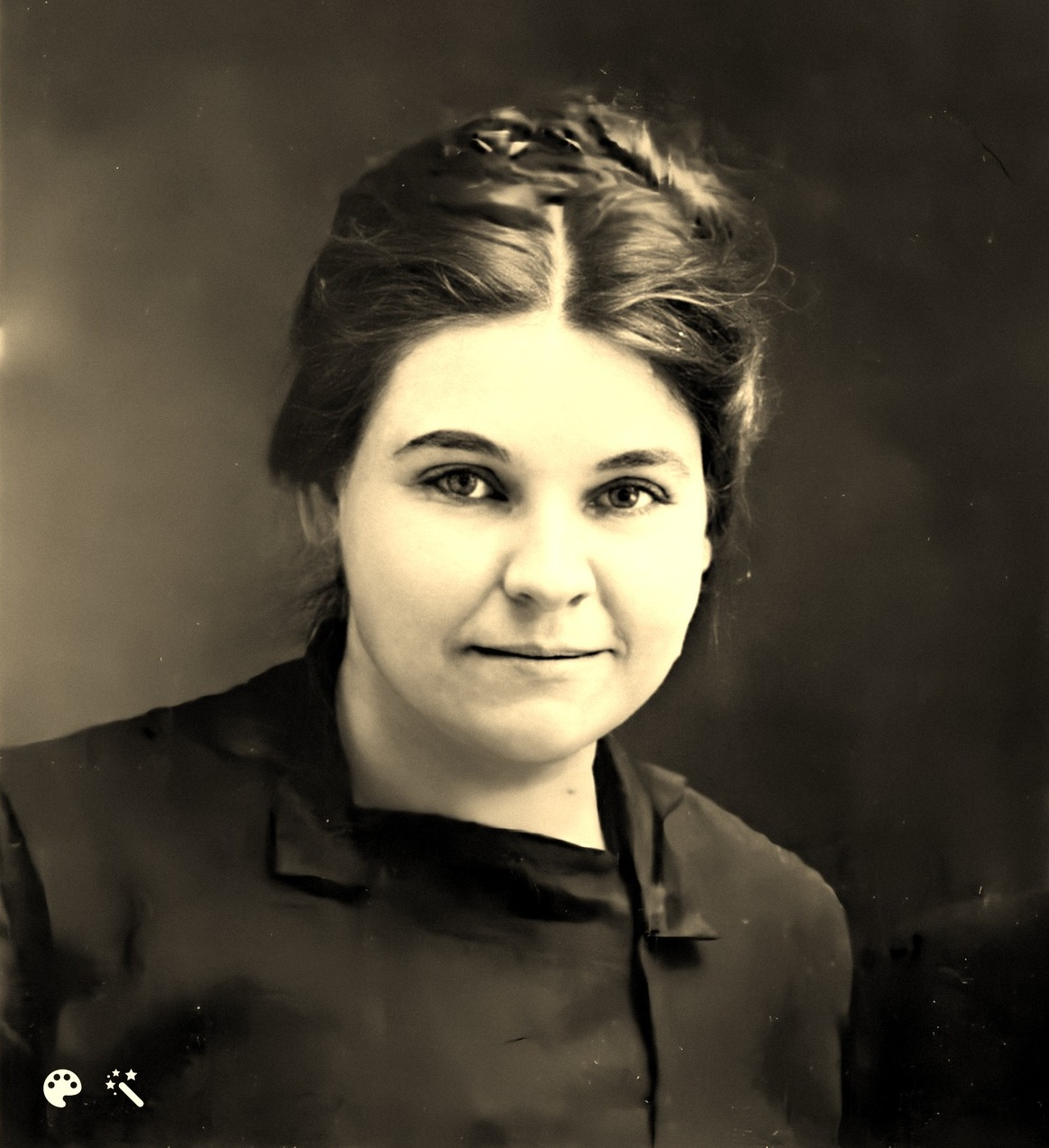
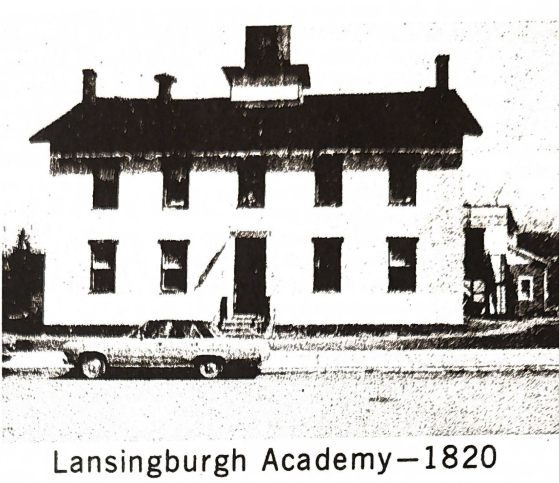
When we first moved to Lansingburgh, in 1901 when I was eight years old, I went to the Methodist Sunday School. Each summer they had an excursion. All went well for a while until one Sunday they were giving each child a pack of tickets. Each Christmas a wealthy brewer, Bolton’s Brewery, bought gifts for the children of the Sunday School. The tickets were for a church supper, entertainment or something. My parents never believed the church should raise money that way, but people should give their money willingly without expecting something in return. This time I told them I didn’t want to sell tickets. When the Superintendent, Miss Weaver, heard that, before the large Sunday School she said, “Some children here are ready to go on free excursions and get presents at Christmas time, but they are not willing to do their part.” My pride was wounded. I declared I would never go there to Sunday School again or accept anything from them. I had a playmate, Blanche Van Bleck, who went to the Baptist Sunday School. She consoled me and said to come with her to their Sunday School and I’d never have to sell tickets. So that was when I switched to the Baptist Church. This was around 1902 or 1903. At about the same time our school burned, which has been mentioned before, revival meetings were started in Millis Memorial Baptist Church of North Troy, New York. This was about January of 1914. Two fine young ladies, Mae Lindsey and Ruth Talbot, were the evangelists. One did the preaching; the other led the chorus choir. They created quite a stir. It seemed everyone was attending, from the other churches and even those who paid no attention to religion. Some of my own family, my mother, Hattie, Roy, Eva, Clara and her husband Lew Grandjean were going every night. My older sister, Hattie, even joined the choir and some friends who worked with her also joined. I became curious to know what the attraction was and finally joined the chorus choir too. I went for a week and it seemed when the invitation was given, I was a target. By sunday, I so felt my need of Christ, of whom they preached and sang, that I really prayed for God to help me to become an inquirer that day or night. The invitation to come to Christ had been given that night but it seemed a power, other than my own, resisted. The inquirers had been taken into another room; others were dismissed. Downhearted, I went to the choir room to get my coat. A timid, elderly lady by the name of Miss Wiltsey was there, too. She said, “Bessie, are you a Christian?” I said, “No.” She asked, “Wouldn’t you like to be?” I said, “Yes.” She then invited me to go where the others were praying. When I got there, I dropped on my knees and wept, asking God to forgive my sins and receive me as His child and come into my heart. Right then I knew I was saved, forgiven and happy. Then a certain feeling, or call it what you will, came, and it seemed as if the Lord was telling me that I was not to make music my career, because He wanted me to be an evangelist and witness for Him. As things worked out, the very next night I was asked to take over at the piano and accompany the choir and congregation with the singing. The meetings were every night for several weeks except Saturday and I played each night. Soon after, when the special meetings closed, I was immersed and joined that church. During that time, I was just beginning my studies at the old Lansingburgh Academy but I was not there long.
I sang in the church choir and four of us held a meeting in a mission one night a week. One would play, one sing solos or lead the singing and we took turns as speaker of the evening. Later classes were arranged at the County Orphan Asylum for the teen-age girls and once a week I had a class of them to teach. I played the piano at church and later my brother Simmie, under the YMCA, arranged for chapel services for all the orphans on Sunday afternoon at the Rensselaer County Orphan Asylum. He worked me into playing the pipe organ for that service. I would go there Wednesday nights and the matron, being an organist, gave me instruction. I began about that time to be called upon to speak at churches and chapels when I was about fifteen. This was about 1908. One Sunday in the Baptist Church of which I was a member, a lady, Miss Lena Rentz, who was assistant superintendent of quite a large collar factory, came to me and asked if I would like to work for her and offered me $6.00 a week, which was what most office help were receiving then. I jumped at the chance. I worked there for some time and really enjoyed it. My work was mostly desk work. But she bought a place in Florida and a man took her place. He was a quiet man but sometimes he smelled so strongly of liquor, I could hardly stay near the desk and some days he didn’t show up for work at all. Finally I found another job running machines, making men’s collars running things up on the wrong side of the material. It being piece work, I could make $12.00 or $13.00 a week, which seemed a lot then. I worked there till I went into evangelistic work when I was eighteen. This was a great turning point in my life. During late summer of that year of 1911, I attended the Annual Conference of the Free Methodist Church at Saratoga, New York. My mother had, with my father, been a charter member of the same church when it was organized by Bishop B.T. Roberts. There was no church of that denomination in the area where we lived, so she was a member at Saratoga. Another elderly lady, Martha Roberts, from Troy, introduced me to one of the District Superintendents as “The Little Preacher from Troy.” The District Superintendent, Rev. H.L. Crockett, asked me if I had done some preaching. Later, he came and asked if I would be willing to go out with some other young people to hold some meetings on his district. I replied that I would be willing but I didn’t know how my parents would feel about it. He took my name and address. I thought that probably nothing would come of it and went back home to my old job. One day in October of 1911 when I came in from work, my mother handed me a letter which had been opened. It gave me a shock when I read it. It was from a minister, Rev. G.B. Lane, who was pastor of a church at Clarenceville, Quebec, Canada — south of Montreal. He said they had an elderly lady, Miss Woodbury, from the Methodist Conference there and she felt the need of someone to assist with preaching, prayer groups and singing and he had heard of me through the Superintendent. He also asked that I should send word if I would come and plan to come by the Next Tuesday. This was Thursday, so I had to make a quick decision. I knew my mother would dread to have me leave and go so far from home to strangers I had never seen before. I was just eighteen. My father was anxious for me to go because he thought it was God’s plan for my life, unfolding. We sent a letter asking that they let me know who would meet me and how I would know them and saying I would take the train that left Troy at 2:00 P.M. and would arrive there at 8:00 P.M. Tuesday arrived soon. We waited for the mailman but he brought no word. It was 11:00 A.M. I was to leave downtown at 2:00 P.M. It was an anxious time. My mother sent me out to my father’s shop to learn how he felt about it. He said, “Just go ahead as you planned and you will be all right. I am convinced that this is God’s plan and He will take care of everything.” So my mother and I walked several blocks with my suitcases and boarded the trolley to the city. She put me on the train and bid me good-bye and I was off. It was a dark, gloomy October afternoon in 1911 and it seemed a long distance. After we left Burlington, Vermont, I noticed I could see the train lights flickering in a wide expanse of water on both sides of the train. I sure was frightened but learned that the tracks were on a trestle that was built through Lake Champlain. Later, I heard a man talking to a woman back of me, asking where she lived, her name and where she was going and all sorts of questions. I thought how foolish she was to tell a stranger all her business: I knew better than that. It was not long before he was standing beside my seat and asking me the same questions. He had on a uniform, and I soon learned he was the Customs Officer. It hadn’t occurred to me that I was crossing the line between the United States and Canada. After riding considerably farther, the train stopped at the town of Clarenceville. I had wondered if anyone would meet me or how I would know them. My fears were in vain. When I stepped down from the train to the platform, a man wearing a fur coat and hat came directly to me, asked if I was Bessie Lester and introduced himself as Rev. G.B. Lane, who had sent the letter. By the time he had received my request I had mailed, he said it was too late to get an answer to me before Tuesday. So he was doing as we were doing, praying it would work out all right. I was there eight weeks, from late October until late December, with prayer meetings afternoons and preaching at night. The pastor’s home was a delight to be in. Never a cross word was heard, family devotions were held each morning and each child took part in the reading of the scripture and prayer. Around the table after the evening meal, the parents prayed. Most people of that area were French, but around Clarenceville were many English people and there were several Protestant churches. While there at Clarenceville, I received a letter from the Superintendent, Rev. G.L. Skinner, of the Northern New York District asking me to work on his district all the next summer with a group of young people. Also, I was asked to go to Gouveneur, New York right after Christmas, which I did. The pastor’s wife, Mrs. Rowley, expected a baby before I would arrive, but it didn’t happen in time so it was arranged for me to hold meetings at another place on that circuit. For five weeks I was there in that north country and I knew what winter was. Part of the time I held meetings in a little schoolhouse. Each night, Mrs. Streeter, the lady I was staying with, and I would walk a mile to the schoolhouse through the deep snow and a very low temperature, for about three weeks. We had to do everything such as carrying in wood, starting the fires, lighting the lamps. I preached each night, sang solos, led the group who were there in singing. Then came the long walk home again. I would be hungry and she would set out all the milk I could drink, homemade friedcakes, homemade bread. The Streeters had a big dairy, so we had lots of milk and cream; they kept pigs, so we had ham, fried pork and bacon. Having lived in cities most of my life and paying high prices for such things, we just didn’t eat that way. When I left there, I had gained twenty-five pounds in five weeks. After I had held the meetings in the schoolhouse, then we had meetings in the church on that end of the circuit for another two weeks. It was called The California Church. From there, in early February, I went to Norwood for a time. A young couple, Rev. and Mrs. John Hessler, were the pastors there and expecting their first child. I could never forget the sweetness and dedication of this couple. She was a graduate nurse with a good salary in a Utica hospital; her husband was a graduate of Cornell University, but to promote the kingdom of God, they had “left all to follow Jesus.” I always remembered a remark she made when she took me to the room I would occupy while I was there. She had fixed a couple crates with pretty curtains around and a board on top to look like a dresser, and hung a mirror above it. Besides this, there was and change from our work in the band. Our next meeting with our group was at Massena, New York in August of 1912. A furnished house had been rented for our use while there. A large tent was put up on the lawn of an unoccupied public school. There we took turns with everything. The girls, Ethel Skelton, Anna Belle, Lillie Dolan and I, took turns getting the meals and housework, also some called afternoons while others preached at the evening service. In our rented house there was a very nice piano which we enjoyed playing and singing with its accompaniment. One hot morning when Lillie and I had to get the breakfast we found a pound of lard in the pantry all melted in a bowl. We had no refrigeration. I still had quite a lot of mischief left in me. I suggested to Lillie that when breakfast was placed on the table that dish would be there, as if it belonged there. We called the folks, including Rev. John Hessler from our church in Norwood, who had remained overnight. As they were seated and began passing things, Rev. Skelton asked if what was in the dish was a new kind of breakfast food. He said, “I’m going to try it.” We tried to stop him but he had put a spoonful into his mouth already. Well, we had a good laugh and they all enjoyed the joke. There were many things about that meeting in Massena that I still remember. There was the night a man selling medicine got the street corner assigned to us, so we took the opposite corner. A moving congregation shifted from one corner to the other, trying to digest what was being said on one corner about healing for the body, and on the other corner, about healing for the soul. The man selling healing of the body was the famous Rattlesnake Pete; he sold an oil which was supposed to cure most anything. It was called Rattlesnake Oil. Or, there was the woman we met in our house-to-house calling. She lived upstairs. When we knocked she called to us to come up. We invited her to come to the meeting that night. She said yes, she had heard about the meeting and now, as her old man was dead, she would be free to go. I doubted her intentions, but sure enough, she walked into the tent that night, clear down to the second seat. She looked as if she had just come out of an 1864 pattern book. I sort of watched her during the preaching to see how the gospel was taking effect. When the altar call was given, I went down to her and asked her if she would like to come up to the altar and pray. She said, “Yes,” and started ahead of me. To my utter amazement, instead of kneeling on the outside of the altar, she stepped inside and up on the platform with the other workers, facing the audience. In desperation, I said, “Sister, get down there and pray.” She stepped down and knelt up straight and faced the audience. By that time I didn’t know what more to do. From that time the others of my group called her my convert. We learned that she was a well-known character on the streets of Massena. After that meeting closed, the last of August, 1912, we went to Watertown, where meetings were held in a large tent. Children’s meetings were held afternoons. Those who were not involved called in the homes. Shop meetings were held during noonhour in some of the large plants, street meetings were held on the corners in the business sections, before services in the tent evenings. It was a busy life we lived. Annual Conference was held at Camden, New York, about September 1. Rev. Skelton was assigned to his first circuit. Anna Belle and I were sent as pastors to Massena and Long Sault Island, which is now almost buried in the St. Lawrence Seaway; it was about six miles from Massena. Some well-to-do members of our church, the Cobanes, were desirous of having a church on the island. They, with funds from the Conference, stood by us financially. We found a pleasant furnished apartment in town and had the use of a large room in what had been the public school. A new school had been built in its stead. On Sundays we held meetings in Massena and on Long Sault Island Wednesdays.
We had no transportation, only walking. Wednesdays we would leave Massena, after noon lunch, and walk four miles till we reached the St. Lawrence River, then walk beside the river two miles more. There we would stop at the home of an elderly couple, Mr. and Mrs. Sutton. He was Mrs. Cobane’s father and knew the St. Lawrence well. He would take us in a rowboat to Long Sault Island. It was close to the Long Sault Rapids (something like the current above Niagara Falls). He had to row upstream a mile to land opposite to where we started from. We would get out of the boat and walk two miles farther cross-lots to reach the Cobane home where we always stayed when on the island. We reached there about suppertime. After the meal we would drive two miles to the schoolhouse, where most of the people of the island would gather for the service. We alternated with the preaching and I led the singing and sang solos because Anna Belle didn’t sing.
Sometimes we went back the next day to Massena the same way we had come. Other times, if Cobanes had to drive to Massena, we would ride in the buggy to the landing, then we boarded a scow. They would drive the horse and buggy onto the scow, and row it across to main shore. Sometimes we stayed in the buggy and sometimes we got out and stood beside the buggy while crossing. When we reached the U.S. shore we would drive the other six miles to Massena. We did this until January, 1913, when the ice started floating in the river. This made it very dangerous to cross. We were given permission to leave and come back in May to finish out the conference year.
We had had a standing invitation to hold meetings in Binghamton, New York so we took that time to go. We did enjoy it very much there. It was one of our larger churches and we made some lifelong friends there. We went through the Endicott-Johnson Shoe Factory, the Binghamton State Hospital and many other interesting places.
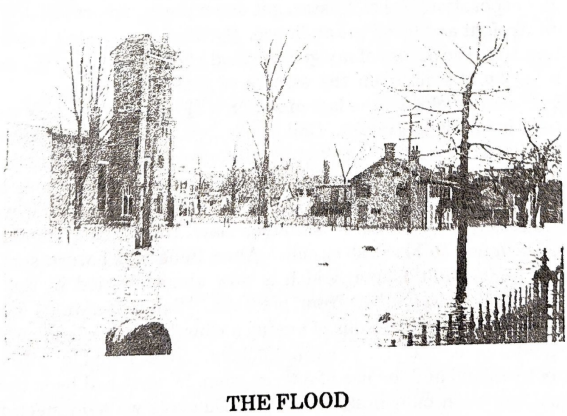
When we left there, we separated for a time. I had a standing invitation to come to Charlottsville, near Albany, and Anna Belle had an invitation to go to Weedsport. After I left Charlottsville, I went home for a short visit and while there was hemmed in by one of the worst floods the Hudson had ever had. The water was up to the floor of the bridges and up to the second stories of some houses. Many were taken from their homes in rowboats; some from the second floor. It didn’t affect my folks too badly, as they were far enough from the river, but we couldn’t go far from our houses.
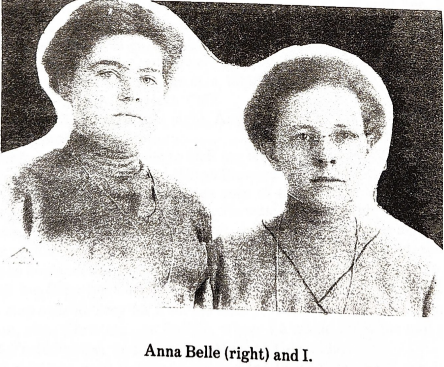
 In May of 1913, Anna Belle and I went back to Massena and were there until August, the time of Conference. After that we were together for five or six years in evangelistic work.
We each tried to visit our families at Christmas time, and in early spring and a short time after Conference in the fall. Anna Belle’s parents had a beautiful home in East Williamson. There were six girls in their family; two were married; those at home were Sadie, Anna Belle (when she was not out in evangelistic work), Ida and Bessie. There were no boys in the family. Her mother used to say she wished they had a son so I could become a member of the family. I was always welcomed there whenever we stopped for a few days in our busy schedule. The mother always treated me as if I was one of the family.
During the time we were together, we visited many churches and camps. It would be interesting to know of some of our experiences during those years while we spent weeks in many of them but it would take too much time to write about them all. During that time we took part with preaching, singing, counseling at camps, and in town and cities and villages. Just to mention some: Syracuse, North Chittenango, Oneida, Rome, Utica, Herkimer, Scotch Bush in the Adirondacks, Alton, East Williamson, Binghamton, Norwich, Cortland, Corning, Caton, Northville, Wellstown, Saranac Lake, Ransomville, Akron, Tonawanda and many other places.
We were at North Chittenango for a six-weeks meeting the winter of 1914. The next winter the pastor, Rev. Oren Fero, had to leave because his wife was ill and had to go to a different climate. The District Superintendent, Rev. W.H. Clark, with the Official Board’s sanction asked us to go there and finish out the year. That meant living in the parsonage and keeping house. We enjoyed being there for that summer but supposed we would be going on in our regular field after Conference.
In May of 1913, Anna Belle and I went back to Massena and were there until August, the time of Conference. After that we were together for five or six years in evangelistic work.
We each tried to visit our families at Christmas time, and in early spring and a short time after Conference in the fall. Anna Belle’s parents had a beautiful home in East Williamson. There were six girls in their family; two were married; those at home were Sadie, Anna Belle (when she was not out in evangelistic work), Ida and Bessie. There were no boys in the family. Her mother used to say she wished they had a son so I could become a member of the family. I was always welcomed there whenever we stopped for a few days in our busy schedule. The mother always treated me as if I was one of the family.
During the time we were together, we visited many churches and camps. It would be interesting to know of some of our experiences during those years while we spent weeks in many of them but it would take too much time to write about them all. During that time we took part with preaching, singing, counseling at camps, and in town and cities and villages. Just to mention some: Syracuse, North Chittenango, Oneida, Rome, Utica, Herkimer, Scotch Bush in the Adirondacks, Alton, East Williamson, Binghamton, Norwich, Cortland, Corning, Caton, Northville, Wellstown, Saranac Lake, Ransomville, Akron, Tonawanda and many other places.
We were at North Chittenango for a six-weeks meeting the winter of 1914. The next winter the pastor, Rev. Oren Fero, had to leave because his wife was ill and had to go to a different climate. The District Superintendent, Rev. W.H. Clark, with the Official Board’s sanction asked us to go there and finish out the year. That meant living in the parsonage and keeping house. We enjoyed being there for that summer but supposed we would be going on in our regular field after Conference.
 The Board asked Conference to send us back for the next year, and that was done. We were there from September of 1915 to September, 1916. So much was packed into that year. We had to preside at the board meetings, visit the homes; especially the shut-ins and the ill. We alternated with the preaching, both morning and evening services on Sunday. The church was usually filled for we were the only church in the community. We each taught a Sunday School class. Anna Belle taught the young people’s class and I had the adult class of about thirty members.
I remarked to someone that it seemed strange that so many died that year. We conducted five funeral services, largely-attended ones of prominent people, held in the church for three of them and two at the homes. Besides, I sang in quartettes at some of the funerals. I still have many wonderful memories of that place and have friends still attending church that were there at that time. I sometimes visit there and have spoken in their nice new church building.
While at Chittenango the men of the church used to cut up railroad ties for us to burn in our stoves. We were to leave for Conference on Monday before September 1st, at the end of the Conference year in August. My sister, Eva, was with us and for some reason we went into the woodshed. There we saw a large chunk of wood that hadn’t been split yet, so Anna Belle said she was going to split it to burn it all before we left. (We didn’t expect to be sent there for the next year.) She hacked at it but couldn’t make a dent in it. I said, “Give me that axe. I’ll show you how to do it.” I lifted the axe high above my head and when it came down, it hit that block on a corner and it flew up and hit me in the face, just under my eye. You can imagine how I was stunned and the nice black eye I had to wear to Conference two days later. On the train going from Syracuse to Binghamton, I overheard people’s remarks about me and they were wondering how I got it. One day they arranged all the preachers on the front steps of the church, forty-six of them, to take a Conference picture. I was not there. Someone asked where I was. Another said they had seen me go into the church. Someone was sent to find me. I was hiding in a small back room because I didn’t want to be in the picture with that black eye. They opened an aisle down the steps and placed me next to Bishop Pearce (for whom Pearce Memorial Church at North Chili, New York is named). That surely was not my “proudest moment.”
The Board asked Conference to send us back for the next year, and that was done. We were there from September of 1915 to September, 1916. So much was packed into that year. We had to preside at the board meetings, visit the homes; especially the shut-ins and the ill. We alternated with the preaching, both morning and evening services on Sunday. The church was usually filled for we were the only church in the community. We each taught a Sunday School class. Anna Belle taught the young people’s class and I had the adult class of about thirty members.
I remarked to someone that it seemed strange that so many died that year. We conducted five funeral services, largely-attended ones of prominent people, held in the church for three of them and two at the homes. Besides, I sang in quartettes at some of the funerals. I still have many wonderful memories of that place and have friends still attending church that were there at that time. I sometimes visit there and have spoken in their nice new church building.
While at Chittenango the men of the church used to cut up railroad ties for us to burn in our stoves. We were to leave for Conference on Monday before September 1st, at the end of the Conference year in August. My sister, Eva, was with us and for some reason we went into the woodshed. There we saw a large chunk of wood that hadn’t been split yet, so Anna Belle said she was going to split it to burn it all before we left. (We didn’t expect to be sent there for the next year.) She hacked at it but couldn’t make a dent in it. I said, “Give me that axe. I’ll show you how to do it.” I lifted the axe high above my head and when it came down, it hit that block on a corner and it flew up and hit me in the face, just under my eye. You can imagine how I was stunned and the nice black eye I had to wear to Conference two days later. On the train going from Syracuse to Binghamton, I overheard people’s remarks about me and they were wondering how I got it. One day they arranged all the preachers on the front steps of the church, forty-six of them, to take a Conference picture. I was not there. Someone asked where I was. Another said they had seen me go into the church. Someone was sent to find me. I was hiding in a small back room because I didn’t want to be in the picture with that black eye. They opened an aisle down the steps and placed me next to Bishop Pearce (for whom Pearce Memorial Church at North Chili, New York is named). That surely was not my “proudest moment.”