The Previc Family and Store
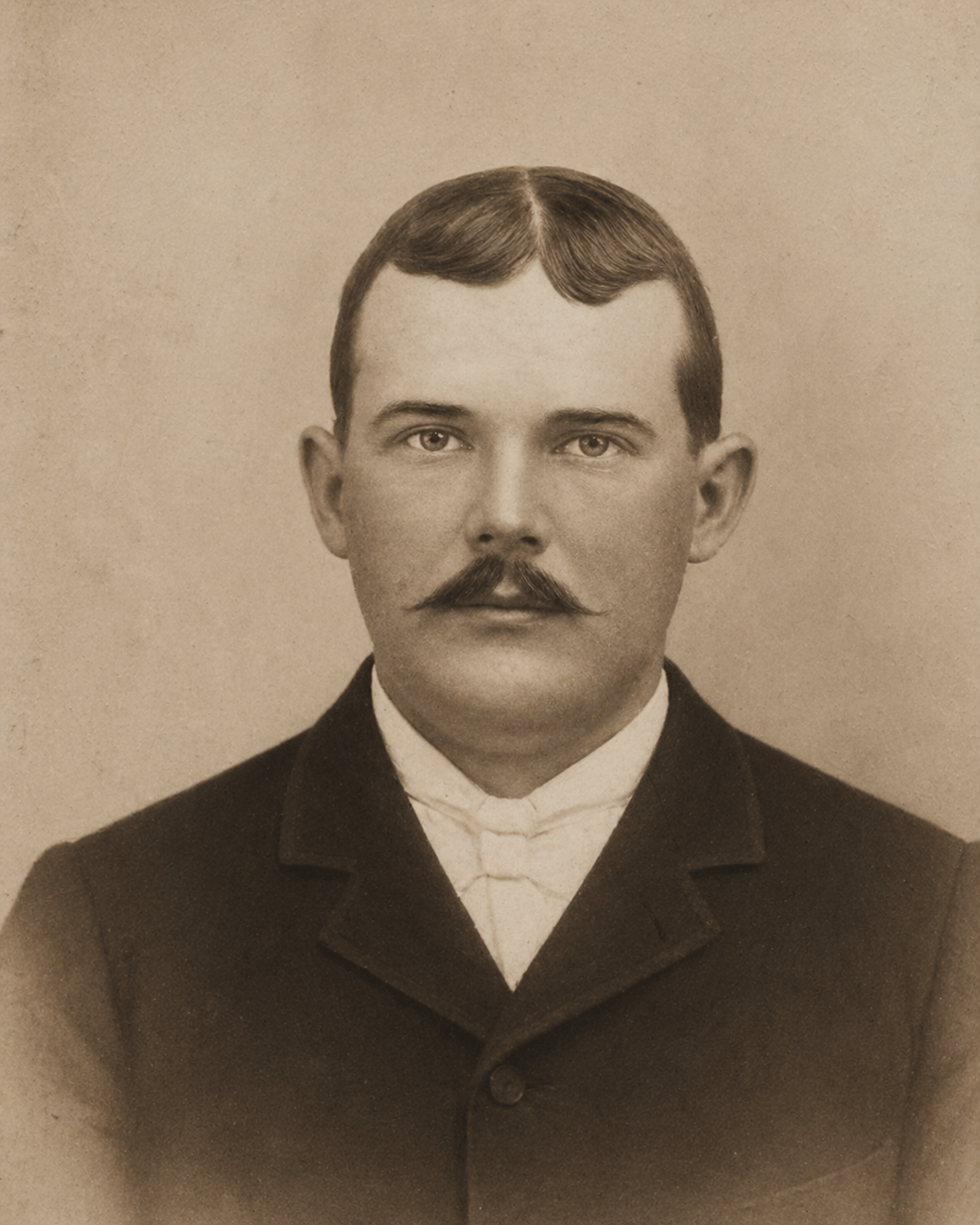
Among the great influx of immigrants who came to the united states from central europe in the late 1800s and early 1900s were some young people who arrived in Clarksville (later renamed Universal) from their homeland in a village near Skofja Loka, northeast of the capital city of Ljubljana, Slovenia. Slovenia was then a part of the Austrian-Hungarian Empire.
Thomas Previc, like most of the men, found a job in the coal mines. A mine accident in 1910, in which one of his legs was crushed, precipitated a change in his life. The physician indicated that amputation was necessary because gangrene had begun to set in. However, Mrs. Smetak, a neighbor, insisted she could save it with a poultice of leaves, believed to be plantain. When the infection began to retreat, Thomas vowed he would never go back into the mine. Since the family lived near Washington School, he decided to open a store selling mostly school supplies such as pencils, rulers, erasers, penny candy, and other notions. This building later became the post office. As Thomas Previc’s business expanded, he bought the property next door on school street and built a three-story house, the first floor of which contained his business. He added groceries and contacted wholesalers from whom he filled orders for shoes from St. Louis, household necessities from Arbuthnot-Stevenson on 7th street in Pittsburgh, and Marietta Chair for furniture. He also made sunday trips to upper 5th Avenue, where the stores were open on sundays, to fill orders for men’s clothing. Not many residents owned cars then, so the groceries were delivered by a horse-pulled wagon, led by a horse named Charlie. Deliveries included 50-lb sacks of feed. Later, groceries were delivered by pick-up and then by a panel truck.
Thomas and Maria Previc’s first daughter, Mary, started working in the store as a youth, as did son Henry. In the 1930s, it was decided to add meats, and another son, Frank, joined his father’s business. Henry and Frank learned how to be butchers and operated the business when their father died in 1943. Mary and her husband Frank Pavlik later decided to move into the first store building and open their own hardware store. Mary eventually became the postmaster of the U.S. Post Office in Universal until it closed. During the great depression years (1929-1941), many residents of Universal and surrounding towns could not find jobs. Tom Previc assured everyone that he would not allow anyone to go hungry. The store ledger that was kept showed thousands of dollars were borrowed on credit, with some individual accounts running as high as $500, even as late as the 1960s, customers would return to pay what they or their parents had owed. One customer even drove over 1000 miles to return to clear his debt! During World War II, many young Universal men left for service overseas, including Frank Previc, who was replaced in the store by his younger sister Helen. (two other Previc sons-Albert and Edward-were employed outside the store). Because of the war, shortages became evident in everyday necessities, which led the U.S. Government to issue ration cards. Small round red cardboard tabs bought meats, blue ones bought vegetables, stamps entitled one to sugar, soap powder, butter, and coffee, etc. Money alone could not buy these items. Newspapers carried recipes for meatless meals, and Ovaltine was used by those who would have preferred coffee. Gasoline was also rationed. Because of shortages, some items could not be “bought” even with the ration tabs and stamps! The store employees filled many orders for customers who sent food packages to the boys in the community who were in the armed forces.
Toward the end of the war there was the trend towards self-serve, cash-and-carry stores, and the search began for vacant property that could be purchased on main street. Two lots were available and bought from Daisy Frack at 2519 Main Street in Universal. Later, another lot was purchased to provide enough parking for the new store. Having served as his own contractor when building his home, Henry Previc felt confident that he could do the same with the store, using local craftsmen. With the help of a grocery organization that supplied plans and Joseph Novak, a universal resident who had been an excellent carpenter in his native Czechoslovakia before he came to this country, the construction got started. Building materials were beginning to become more available again as the war was coming to a close. The new store, which was named “Shop-Rite” opened in 1945 and was the first self-service superette in the vicinity. It was a nicely landscaped store, and was a pioneer in commercial landscaping long before Penn Hills enacted a requirement that a certain percentage of commercial property be landscaped. The store offered S&H Green Stamps based on the amount of the purchase, which could be used by the customer toward the selection of special items but which necessitated a great deal of work, such as burning of retrieved stamp books. The store was a family affair, as Henry and Frank Previc’s wives helped with the account books, coupons, and other tasks and all of their children helped out during the summers and, at times, after-school hours. On the morning of January 1st each year, all family members and some extended family members as well as friends, would gather to provide a complete inventory of the store for tax purposes. Only after the inventory was completed could everyone go back to watching the new year’s bowl games.
“Shop-Rite” supermarket participated in many activities of the community, including fairs, picnics, and halloween parades with the prize Menzie dairy horses, bands, costumes prizes, ancient cars, and treats for all. Shop-Rite also sponsored little league teams, and Henry Previc was active in the Penn Hills Chamber of Commerce, once serving as its president. Frank Previc was a volunteer with the universal fire department who once saved an automobile during a fire in Daisy Frack’s garage, now the location of the Lavender Inn on Saltsburg Road.
One of its favorite foods was “Slovenian klobase” (sausage), which Frank and Henry smoked in a smoke-house in the back of the property. Several hundred pounds were sold each week. Hams and turkeys also were smoked, for special occasions. Hunters brought in their deer to be cut up and made into “deer-burgers”. Once even a buffalo carcass that had been shot in Montana by mayor Tony O’block of Center, PA, was brought into the store! However, these special services to hunters came to an end as the Pennsylvania state health laws became much tighter in the 1970s.
The most prosperous years for the store ended in the early-to-mid 1960s, where larger food-chain stores moved into locations nearby. In the early 1970s, with Henry Previc’s physical health slowly deteriorating and Frank Previc nearing retirement age, the decision was made to close the business. In 1979. The building was bought by Dr. William and Mrs. Phyllis Kernick, who published the Green Tab Newspaper. They operated their newspaper from the building, which they had remodeled, until the death of their son. They later rented the building to Richard Mellon Scaife, publisher of “The Tribune Review”. Later, when scaife expanded his business, he felt he needed more space and built a larger building in Greensburg.
When the tribune review left, the Kernicks donated the old Shop-Rite building on Main Street to the Penn Hills Service Association, which is still located in it. Thus, the store continues to serve the community in which it resides. This is as heartening to the Previc family as hearing, “we still miss the store, ” from former customers! Jennie Previc